

Outdoor Lighting Plan 101: Path, Step, and Patio Lighting That Makes the Space Usable at Night
Updated: Jun 8
Key Takeaways
A good outdoor lighting plan improves safety, navigation, and nighttime usability.
Path, step, and patio lighting should work together—not compete.
Lighting should follow how people move through the yard at night.
Balanced lighting prevents glare and uneven visibility.
Planning lighting early improves long-term usability and performance.
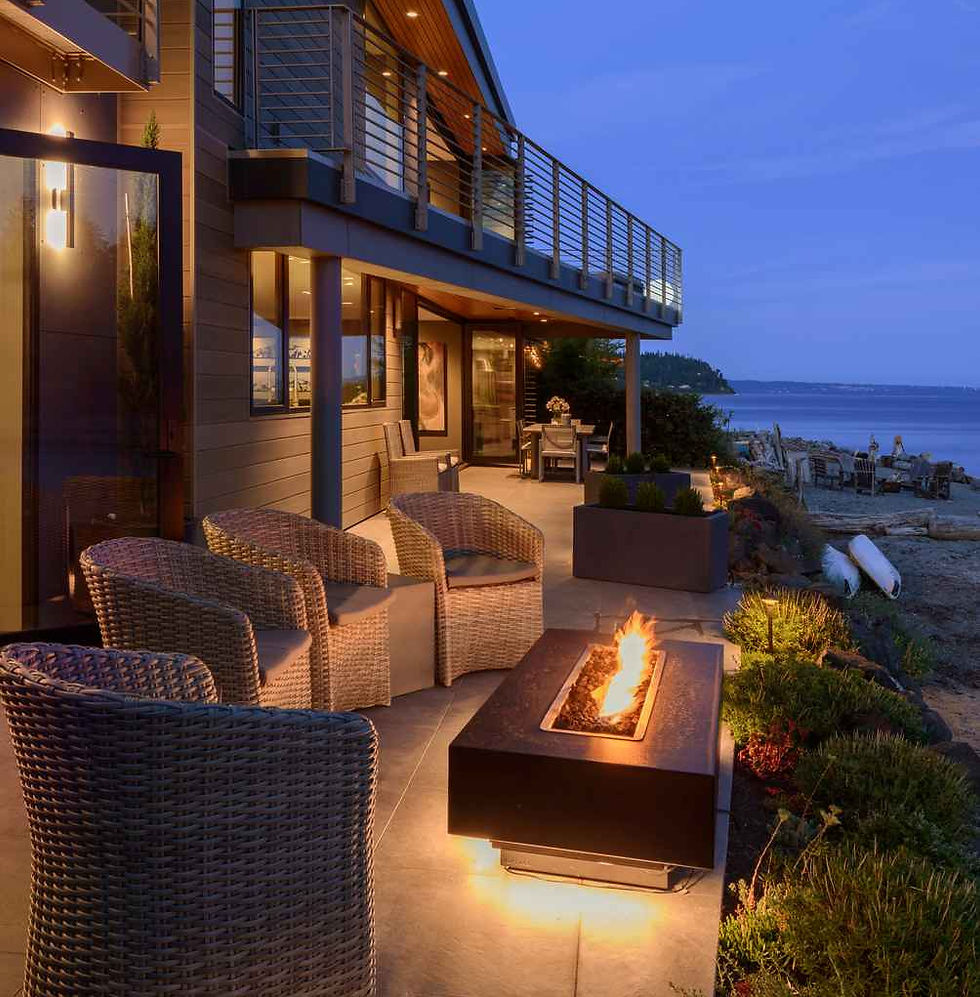
In Kitsap County, evenings don’t end when the light fades—they shift. Dinner moves outside. Conversations linger. The yard becomes part of how the day winds down.
But without a clear lighting strategy, even a well-built space can feel uncertain after dark.
A good outdoor lighting plan uses your path, step, and patio lighting together so the space feels safer, easier to navigate, and more usable at night. It’s less about brightness and more about clarity—knowing where you naturally walk, where your guests gather, and how spaces connect when visibility drops.
Homeowners are increasingly investing in improvements that enhance how spaces function—not just how they look, according to the Joint Center for Housing Studies of Harvard University (JCHS, 2023). Outdoor lighting plays directly into that shift.
What an Outdoor Lighting Plan Should Actually Do
Outdoor lighting is often treated as a finishing touch. In reality, it’s part of how the different spaces in your home function.
A well-designed system improves visibility, reduces hesitation, and allows outdoor areas to remain usable after sunset. It supports everyday movement—walking, carrying items, or transitioning between spaces—without requiring extra attention.
The goal is not to add more fixtures. It’s about better lighting coordination.
While outdoor spaces are less formal than indoor spaces, the same principle applies: people should be able to move confidently. Function comes first. Atmosphere follows.

Start With How People Move Through the Space at Night
Lighting works best when it follows movement and not when it’s placed independently.
Start with the most common nighttime routes: backdoor to patio, patio to steps, steps into the yard, and paths connecting different areas. These are the routes used daily.
Instead of choosing fixtures first, map how the space is used:
Moving food outside
Walking between seating areas
Navigating elevation changes
Entering and exiting the home after dark
Once movement within a space is clear, the placement of lighting becomes obvious.
For your first-time guests who may be unfamiliar with the layout of your home, your thoughtfully designed lighting becomes their guide.
Path Lighting: Guide Movement Without Overlighting the Yard
Path lighting defines direction across the yard. Placed along walkways and transitions, it should create a clear route without overwhelming the space.
Even spacing helps, but intensity matters more. Too much light flattens depth and creates glare, making the space feel artificial. Instead, use overlapping pools of light to create a sense of continuity. This allows movement to feel natural while maintaining a relaxed nighttime atmosphere.
Excessive or poorly directed outdoor lighting can contribute to glare and light pollution, reducing visibility rather than improving it, according to the U.S. Environmental Protection Agency (EPA, 2022). Balanced lighting improves both usability and environmental quality.
Step Lighting: Improve Safety at Grade Changes and Transitions
Steps require dedicated lighting because elevation changes are harder to read in low light.
Your deck stairs, patio transitions, and entry steps should all benefit from clearly defined edges and depth. Without it, even a well-lit space can feel uncertain and be actually unsafe.
The National Association of Home Builders emphasizes that visibility at transitions is essential for safe circulation (NAHB, 2023).
Beyond safety, step lighting improves confidence. When people can clearly read each step, movement becomes smooth and uninterrupted.
Patio Lighting: Make the Main Gathering Area Usable After Dark
Patio lighting supports how a space is used, not just how it looks. Ambient lighting provides general visibility, while functional lighting supports activities such as dining and conversation. Relying on a single overhead source often creates harsh contrast and uneven lighting.
A better approach is layered:
Soft ambient light for overall visibility
Focused light for seating and dining areas
Gentle transitions into paths and steps
This creates a space that feels comfortable and usable—not overly lit.
How to Layer Outdoor Lighting Without Making It Feel Harsh
Layering works when lighting levels are balanced across the space.
Path, step, and patio lighting should overlap enough to eliminate dark gaps—especially at transitions. Abrupt changes in brightness make movement uncomfortable.
Glare should also be avoided. Poor placement can create visual strain instead of clarity.
A well-layered plan feels even and consistent. The focus stays on the space, not the fixtures.
The Site Conditions and Layout Details That Affect Lighting Plans
Lighting placement should be shaped by the site.
Slope, drainage, stairs, and layout all influence where your fixtures should go. A terraced yard, for example, requires different lighting decisions than a flat one.
This is why lighting should be planned alongside the overall design:
Steps formed during grading should include integrated lighting
Drainage routes affect fixture placement
Patio layout determines where functional lighting is needed
The Kitsap County Department of Community Development emphasizes that site design—including grading and circulation—affects how outdoor features perform over time (Kitsap County DCD, 2025).
Lighting works best when it’s incorporated into the design, not when it’s added later.
Common Outdoor Lighting Mistakes Homeowners Can Avoid
Most outdoor lighting issues come from misalignment, not a lack of fixtures.
Common mistakes include:
Underlighting steps while overlighting patios
Ignoring primary circulation paths
Creating uneven brightness between zones
Adding lighting after layout decisions are finalized
These problems are easier to prevent than to fix. Planning lighting early ensures it supports how the space is built and used.
How to Build a Lighting Plan Around the Way You Entertain
The most effective lighting plans reflect real use.
Consider:
How often is the space used at night
Do your guests move between multiple areas
Where do elevation changes occur
How frequently do people transition between indoors and outdoors
These patterns determine where lighting matters most.
When lighting aligns with how the space is actually used, it disappears into the experience—quietly supporting movement, comfort, and connection. Contact one of our outdoor lighting experts today and see how an effective lighting plan can enhance your outdoor living space.
FAQs
1. What type of outdoor lighting is best for a patio?
The best patio lighting combines ambient and functional layers. Ambient lighting provides overall visibility, while functional lighting supports activities like dining and conversation. Instead of relying on a single overhead fixture, a layered approach creates a balanced and usable space that avoids glare and uneven brightness.
2. Where should path lights go in a backyard?
Path lights should follow natural walking routes such as from the back door to the patio, between seating areas, and toward steps or side paths. Placement should guide movement clearly without overwhelming the space. Subtle spacing and moderate brightness help maintain a natural nighttime feel.
3. Do steps really need separate lighting?
Yes, steps require dedicated lighting because elevation changes are difficult to see in low light. Step lighting defines edges and depth, improving both safety and ease of movement. Without it, even well-lit areas can feel uncertain.
4. Should outdoor lighting be planned before a patio or backyard remodel is finished?
Yes, outdoor lighting should be planned early in the design process. Integrating lighting with layout, grading, and structural elements ensures better placement and performance. Adding lighting after construction often limits effectiveness.
5. Can outdoor lighting improve entertaining spaces, not just safety?
Yes, outdoor lighting improves both safety and usability. Well-planned lighting allows guests to move comfortably, see clearly, and feel at ease. It extends the functionality of patios and outdoor areas for both gatherings and everyday use.
REFERENCES
Joint Center for Housing Studies of Harvard University. (2023). Improving America’s Housing 2023. https://www.jchs.harvard.edu
National Association of Home Builders. (2023). Residential Construction Performance Guidelines. https://www.nahb.org
U.S. Environmental Protection Agency. (2022). Light pollution and energy efficiency guidance. https://www.epa.gov
Kitsap County Department of Community Development. (2025). Development regulations and site planning guidance. https://www.kitsapgov.com/dcd


Comments