

Aging in Place Renovations for Long-Term Living
Think about how your home works for you day to day—how easy it is to move through, how safe it feels in the evening, how comfortable routines are over time. Aging-in-place renovations shape that experience early, so your home continues to support you without needing to catch up later.
Bainbridge Island and Kitsap County are places where homes are built with love and lived in for decades. Thoughtful updates help you stay in a place you already know and enjoy—just with better support built in.

Photo by: HARMONY HOUSE INTERIOR DESIGN

NAHB CERTIFIED
As Certified Aging in Place Specialists (CAPS), we take the anxiety out of the experience by providing you with personalized guidance and solutions that make your home safer, more accessible, and comfortable.
Practical Updates That Support Daily Life
Most homeowners don’t think about accessibility until something feels off—a slippery bathroom floor, a hallway that’s harder to navigate at night, or a kitchen that takes more effort than it used to. Small moments, but they add up.
With the right updates in place, the home feels easier to move through. Lighting is clearer in the early morning. Showers feel steady and comfortable. Moving from room to room becomes more functional and natural.

Photo by: HARMONY HOUSE INTERIOR DESIGN
Aging-in-place renovations often include:
Walk-in showers, grab bars, and safer bathroom layouts
Improved lighting throughout the home
Main-floor living adjustments to reduce reliance on stairs
Kitchen updates that improve reach and workflow
Wider doorways and clearer pathways
Slip-resistant flooring and durable materials
Each change is designed to fit naturally into the home. The goal is simple: everyday use feels easier, safer, and more predictable.
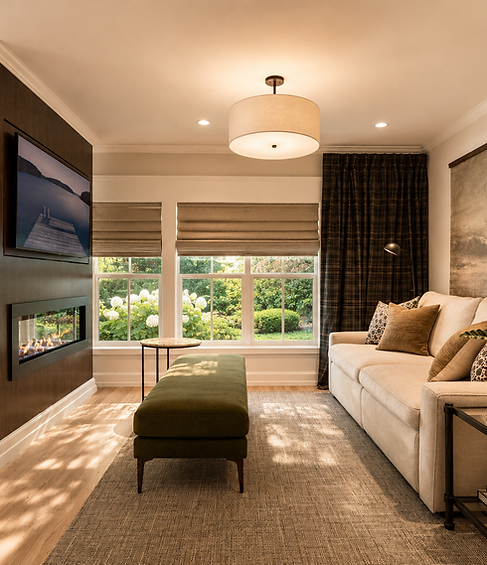
Is Aging in Place Right for Your Home?
Some homeowners plan these updates while everything still works well. Others begin when helping a parent settle in more comfortably. And sometimes it’s just about wanting a home that is easier and safer to live in over time.
You might be considering this if:
You want to stay in your home long-term without major disruption
Daily routines are starting to feel less convenient
You’re supporting a family member who needs safer spaces
You prefer to plan ahead rather than react later
In practice, it often comes down to a few well-chosen adjustments that quietly improve how your home works—without changing how it feels.
Photo by: HARMONY HOUSE INTERIOR DESIGN
Balancing Safety, Comfort, and Design
Sometimes, accessibility updates will make a home feel clinical. That usually happens when changes are added without considering the layout or daily use. When done well, these updates feel thoughtfully integrated. A bathroom can look clean and modern while offering better footing and clearer lighting. A widened doorway may not stand out visually, but it changes how naturally you move through the space.
Homes on Bainbridge Island and the surrounding areas often have unique layouts. Improving movement—whether opening pathways or adjusting how rooms connect—needs to be handled carefully. Structural decisions are made with long-term use in mind. Material choices matter too. Surfaces must hold up in wet conditions. Lighting should reduce glare while improving visibility, especially during darker months. Each decision supports safety while preserving the home’s character.

A Thoughtful, Guided Approach
Most projects begin with a conversation about how the home is used today—and which areas would be updated to make life easier. That might come up while walking through a tight bathroom or noticing how often stairs are used during the day.
From there, we assess the layout and identify practical opportunities. Some homes benefit from small updates. Others need a coordinated plan across multiple spaces.
1
A conversation about routines and future needs
2
A walkthrough to assess layout and movement
3
Clear, practical recommendations
4
Ongoing communication during construction
5
A focus on durability and long-term usability
The goal is steady progress—without rushing decisions that affect how the home works over time.
Experience You Can Trust
Inviting someone into your home to make these changes requires trust. It’s not just about construction—it’s about understanding how you live.
As Certified Aging-in-Place Specialists (CAPS), the focus is on practical solutions that support independence and comfort. That means working beyond standard layouts to create something that fits your home and routines.
You’ll see it in the details—how transitions are handled, how materials are chosen, and how the space feels to use every day. The work is built to last, and built to feel right.
Our consultation and work includes:
Expert Planning Advice With a Certified Aging in Place Specialist
Practical solutions for independence

Designs that fit your home and routines
Built to last and feel right
Our main goal is to create something that fits your home and your routine.
Frequently Asked Questions
Let’s Plan for What’s Next
Thinking about how your home will support you over time doesn’t have to feel overwhelming. It starts with a conversation—looking at what’s working and what could be easier. If you’re considering aging-in-place renovations on Bainbridge Island, we can help you plan it in a way that fits your home and how you live.